
Atlanta World Cup 2026 mass casualty training is now underway, and that tells its own story about where host-city preparation has moved. First responders in Atlanta ran a full-scale exercise ahead of the tournament, focusing on the kind of emergency pressure that large public gatherings can create. That is not glamorous tournament news, yet it is serious and necessary. For World Cup 2026, crowd safety planning matters as much as stadium presentation once fan zones begin to fill.
What Happened In Atlanta
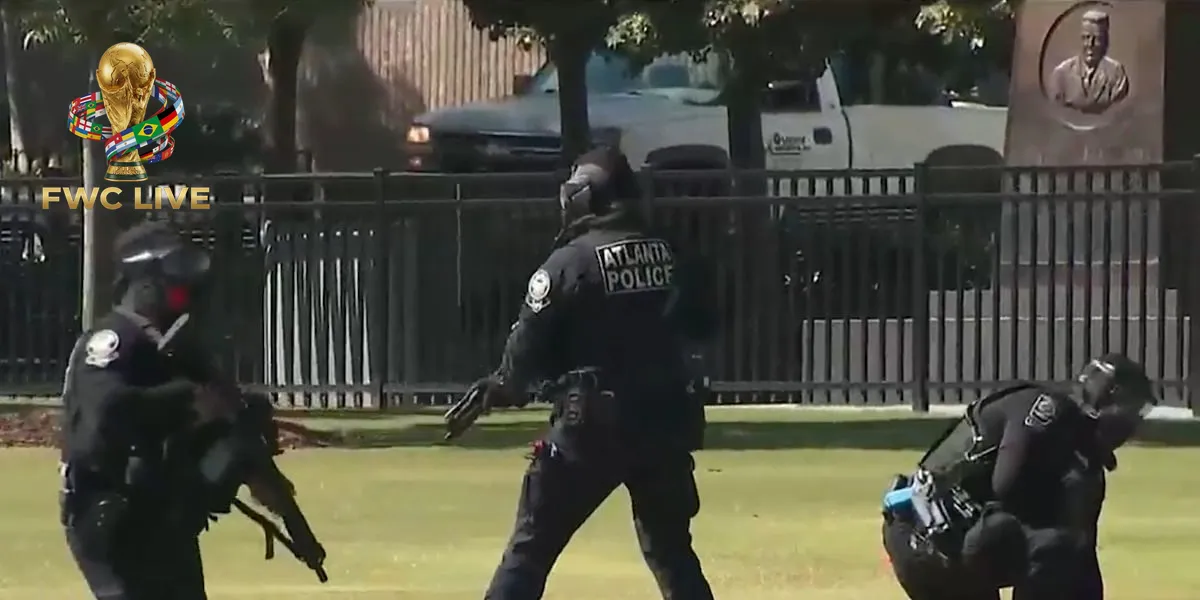
Atlanta first responders took part in a mass casualty training exercise centered on an active shooter scenario at Centennial Olympic Park. The participating agencies included the Atlanta Police Department, Atlanta Fire Rescue, and Grady EMS. That mix matters because large-event response only works when policing, fire, and medical teams operate from the same practical script. The exercise was built to test exactly that kind of coordination.
Officials said around 100 officers and roughly 50 firefighters were involved in the drill. The venue choice also carried weight. Centennial Olympic Park is expected to attract major crowds during fan-fest activity, so the city is training in a space that should actually matter during the tournament. That improves the value of the exercise because the setting reflects a real public-pressure point rather than an abstract simulation area.
The scenario itself focused on stopping violence quickly and saving as many lives as possible. That may sound obvious, yet emergency planning often fails when different services define the first objective differently under pressure. By rehearsing together, Atlanta is trying to cut hesitation before the World Cup arrives. In practical terms, the city is working on response speed, communication flow, and on-site command structure all at once.
Officials also referenced the 1996 Olympic Park bombing as part of the learning frame behind the exercise. That history gives the drill extra gravity. Atlanta is not preparing in a vacuum. It is using a known local trauma as a reason to test whether today's agencies can respond faster and more cohesively if the city faces another mass-attendance emergency.
Why This Is Important In The World Cup Build-Up
Security stories can feel uncomfortable in tournament coverage, yet they are essential if host cities want public trust. Supporters will not judge readiness only by traffic plans or stadium branding. They will also judge whether cities appear calm, rehearsed, and capable when something goes wrong. Atlanta's drill feeds directly into that trust question.
It also underlines how fan-fest spaces change the security equation. Stadiums have controlled access, hardened perimeters, and known ticket counts. Public parks and watch areas are different. Crowd movement is looser, entry patterns are less predictable, and medical access can become harder if activity spreads across multiple points. That is why a Centennial Olympic Park rehearsal matters so much in this particular host-city context.
Atlanta is expected to stage several World Cup matches at Mercedes-Benz Stadium, but the tournament footprint will stretch well beyond the venue itself. Public gatherings, transport corridors, and celebration zones all become part of the operational map. So this exercise should be read as a wider city-preparation story, not only as a police event. The host-city question is whether all those layers can work together under pressure.
There is also a message here for other cities. The closer the tournament gets, the more public proof of readiness starts to matter. Tabletop planning is one thing. A live inter-agency exercise in a likely crowd site is another. Atlanta has now moved into the second category.
What Supporters Can Take From It
The most useful takeaway for supporters is not fear. It is evidence that the city is stress-testing its systems before the tournament starts. Fans should want host cities to run these drills early, publicly, and seriously. Emergency preparation cannot be improvised in a month with crowds already in town. Atlanta appears to understand that.
This also adds another layer to how readers should assess the Atlanta host city build-up. Big-event readiness is not only about ticket sales, volunteer uniforms, or hotel inventory. Those things matter, yet so do the quieter systems that only become visible when agencies train together. In fact, the strongest host cities usually prove competence through these less glamorous updates.
The next question is whether Atlanta keeps the same transparency as planning advances. More coordination work around transport, crowd flow, and medical staging would be a good sign. If the city continues to show visible operational drills instead of only promotional messaging, confidence around its tournament readiness should improve.
For now, this is one of the clearest reminders that the World Cup is no longer far away for host-city agencies. Atlanta is already rehearsing the hardest scenarios, and that is exactly what it should be doing.
Frequently Asked Questions
What changed with Atlanta World Cup 2026 mass casualty training?
Atlanta has started rehearsing worst-case emergency response around likely fan gathering points, showing how seriously host-city security planning has shifted.
Why is Atlanta World Cup 2026 mass casualty training important now?
Atlanta World Cup 2026 mass casualty training is now underway, and that tells its own story about where host-city preparation has moved.
What should fans watch next on Atlanta World Cup 2026 mass casualty training?
Atlanta first responders took part in a mass casualty training exercise centered on an active shooter scenario at Centennial Olympic Park.
Atlanta has moved its World Cup preparation into the emergency-response phase, where practical coordination matters more than slogans.
That is a serious step, and it is one supporters should read as evidence of real host-city planning.
Stay tuned to FWCLive.com for the latest FIFA World Cup 2026 updates.
Read Also: Los Angeles Plans 100 Plus Free World Cup Watch Parties