
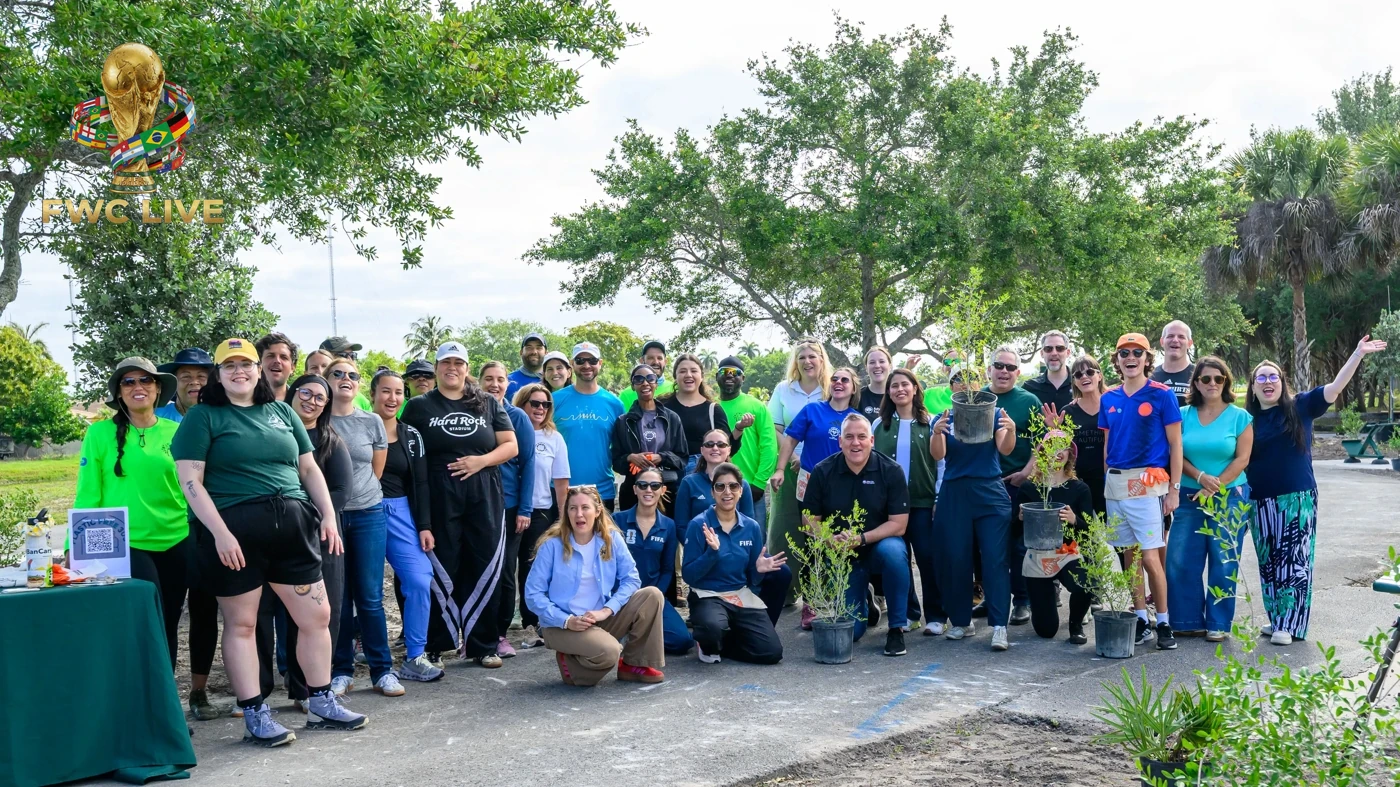
The FIFA World Cup 2026 tree planting host cities program now stretches across the entire tournament map. FIFA says it is backing reforestation and community planting work in all 16 host cities through its collaboration with the Arbor Day Foundation. That makes sustainability one of the clearest visible legacy projects in the run-in to the competition. For FIFA World Cup, the environmental pitch is now moving from strategy language to work on the ground.
What FIFA has officially confirmed
FIFA says the wider initiative aims to plant one million trees through reforestation projects across North American forests. On top of that, more than 12,000 community trees are due to be added in parks, schools, trails and other public spaces across the 16 host-city regions.
The scale is larger than a one-day Earth Day campaign. FIFA says the program includes 19 forest projects, 20 community planting events and 24 local partners. That gives the project a footprint that should continue well beyond the tournament summer.
How much work has already been completed
FIFA says more than 250,000 trees have already been planted through reforestation work and local events. The broader reforestation program is projected to cover more than 2,000 acres, which FIFA compares to roughly 1,000 football pitches.
Those numbers matter because large event sustainability plans are often announced before delivery starts. In this case, FIFA has attached progress figures, partner counts and a live calendar. That makes the update easier to treat as an operational project rather than a branding line.
That visibility also raises the standard for follow-through. Once a program moves into named cities and dated events, communities can judge whether the tournament leaves something practical behind. FIFA now has to meet that expectation.
Which host cities are next on the calendar
FIFA said planting events had already been completed in nine host cities when the update was published. The next confirmed dates were Seattle on 24 April, Philadelphia on 27 April, Boston on 1 May, New York New Jersey on 12 May, and Toronto on 30 May.
That schedule matters because it spreads the sustainability story across multiple markets instead of concentrating it in one showcase city. It also creates another public-facing layer around the World Cup host cities beyond stadium operations and fan festivals.
Why FIFA is pushing this legacy message now
The 2026 tournament is so large that environmental scrutiny was always going to follow it. More teams, more flights and a three-country footprint make legacy work more important to explain. Trees alone do not solve that footprint, yet they give FIFA a practical program that local communities can actually see.
The project also matches other local concerns. Trees can help reduce urban heat, improve air quality and support stormwater control, which makes the program easier to connect to daily city life. That is stronger than a generic offset message.
It also gives host cities a shared legacy lane during a build-up that often feels fragmented. Stadiums, transit systems and fan zones vary sharply from market to market. A continent-wide planting calendar gives the tournament one practical civic thread.
Frequently Asked Questions
How many trees does FIFA aim to plant for World Cup 2026?
FIFA says the wider reforestation effort is targeting one million trees across North American forests.
Are all 16 host cities part of the tree planting plan?
Yes. FIFA says every World Cup 2026 host city is included through community planting work and the broader legacy program.
How many trees have already been planted?
FIFA says more than 250,000 trees had already been planted when the update was published on 22 April 2026.
Which cities had upcoming planting events after the announcement?
FIFA listed Seattle, Philadelphia, Boston, New York New Jersey and Toronto as the next scheduled planting-event locations.
FIFA now has a sustainability project with visible scale, not just a policy document. The key test is whether the host-city work stays active through the summer and after the final. For now, the tree planting program is one of the clearest legacy efforts attached to World Cup 2026.
Stay tuned to FWCLive.com for the latest FIFA World Cup 2026 updates.
Read Also: Houston World Cup 2026 Trophy Tour Opens This Weekend