

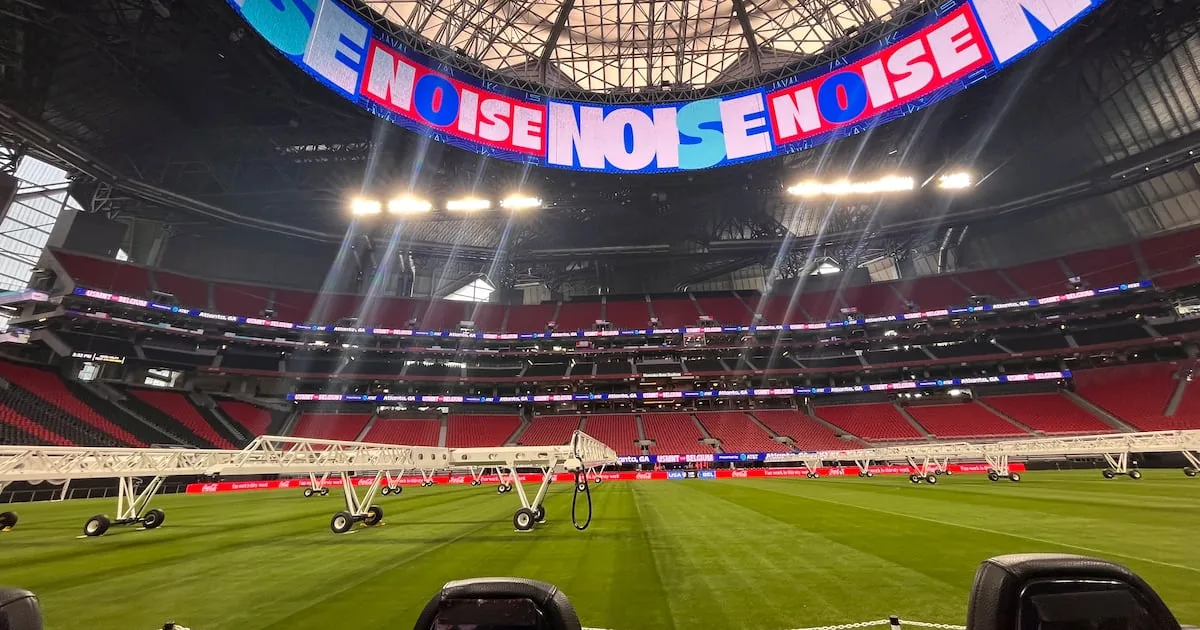
Mercedes-Benz Stadium has cleared an important World Cup test after its hybrid grass surface came through recent United States warm-up matches in good shape. Atlanta now has a clearer read on how the FIFA-mandated pitch behaves inside an indoor venue before the summer handover. The venue will host eight matches, so surface quality is one of the biggest operational questions in the city. That makes the Mercedes-Benz Stadium World Cup grass project more than a groundskeeping story.
Why the early Atlanta test mattered
The recent U.S. matches gave stadium staff a live stress test before the tournament window begins. The pitch had to deal with elite-level movement, repeated sprints, sliding tackles and the sort of close inspection that will come with every World Cup game. That matters because Atlanta is one of the busiest venues on the 2026 map. A weak first trial would have raised immediate concern around the city’s readiness.
Instead, the surface held together well enough to give the local operations team useful confidence. The performances of the U.S. team were disappointing, yet the field itself emerged as a positive takeaway. For a venue that must quickly move from club use into a FIFA-controlled tournament setup, that practical feedback is valuable. It gives the organizers time to refine the final version rather than rethink the whole approach.
How the hybrid pitch is being managed
The Atlanta surface is not a routine stadium conversion. The grass system blends natural turf with stitched-in synthetic fibers to create a stronger playing base while keeping a more natural feel underfoot. Stadium staff have also used grow lights, ventilation support and a detailed maintenance schedule to keep the field alive inside the building. That workload is one reason indoor World Cup venues are under so much scrutiny.
The venue has already used the surface during the first half of the MLS season, which adds another layer of preparation. The current field is still only a trial stage, though, and the final tournament surface will not simply be left in place. Operations staff now have real match data on wear patterns, touchlines, bench-side stress and recovery time. That information should help shape the tournament version of the pitch.
What changes before FIFA takes control
Atlanta’s current grass will still be replaced before the tournament. The plan is for a fresh field to go down in May before FIFA takes over the venue for roughly two months. That timetable is important because Mercedes-Benz Stadium will move from domestic use into a tightly controlled World Cup environment. Once that happens, every detail around presentation, safety and consistency becomes part of FIFA’s final inspection standard.
The eight-World Cup schedule raises the pressure further. The venue will not have the luxury of a light workload, and recovery windows between games will be tight. That means the successful test does not end the story, but it does lower the sense of risk around Atlanta. For supporters checking the World Cup schedule, it is one of the clearest signs yet that the city’s surface planning is moving in the right direction.
Why this matters beyond Atlanta
Atlanta is not the only building trying to solve this challenge. Other venues also need tournament-grade natural or hybrid surfaces that can satisfy FIFA and still hold up under repeated use. Because of that, every successful test at a major site gives the rest of the tournament planning group more confidence. It also shows how much of the 2026 event will be decided by infrastructure rather than headlines alone.
For the United States, venue readiness is part of the national-team picture too. A host country wants smooth operations around every matchday detail, not just strong results on the pitch. That is why the United States national team and the broader FIFA World Cup 2026 build-up both connect back to stadium prep. The tournament will be judged as much by execution as by atmosphere.
Frequently Asked Questions
Why is Mercedes-Benz Stadium’s World Cup grass important?
Atlanta will host eight World Cup matches, so the playing surface is one of the venue’s most important readiness checks.
Will the current grass stay in place for the tournament?
No. The test surface is expected to be replaced before FIFA takes control of the venue for the tournament period.
What kind of pitch is being used at Mercedes-Benz Stadium?
It is a hybrid system that combines natural grass with stitched synthetic fibers for added strength and stability.
How many World Cup matches will Atlanta host?
Mercedes-Benz Stadium is scheduled to host eight matches during FIFA World Cup 2026.
Atlanta still has work left before the tournament starts, but the first major pitch test moved the story in a positive direction. In a venue that will face heavy match traffic, that matters.
The next step is delivering the final surface through FIFA handover and the full World Cup schedule. For now, Mercedes-Benz Stadium has at least answered one major question with something close to a yes.
Stay tuned to FWCLive.com for the latest <a href="/">FIFA World Cup 2026</a> venue updates.
Stay tuned to FWCLive.com for the latest FIFA World Cup 2026 updates.
Read Also: Matt Crocker World Cup 2026 pressure rises