

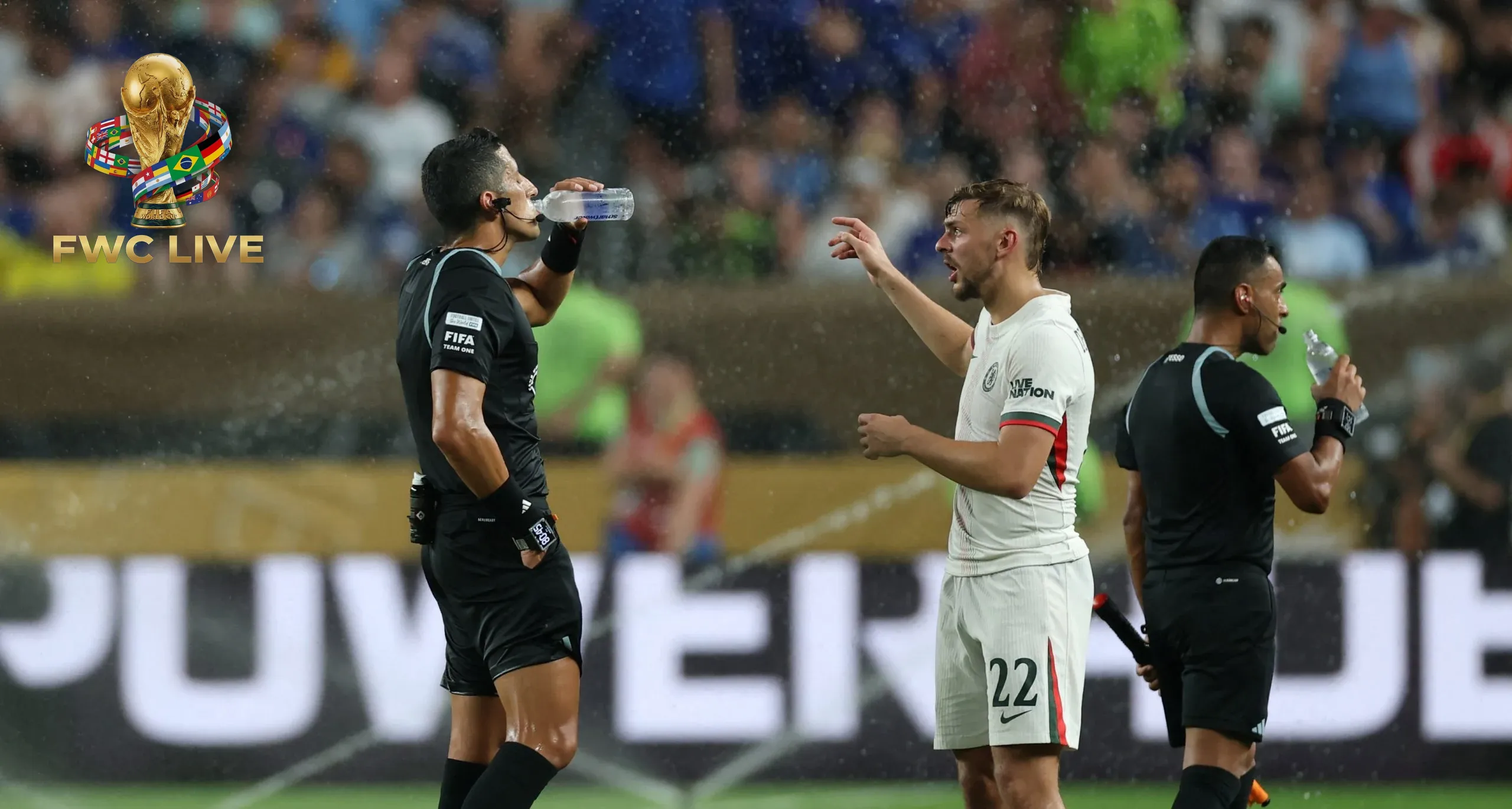
World Cup 2026 hydration breaks are now set to do more than protect players. They also create two extra commercial windows in every match. FIFA will use mandatory three-minute pauses midway through each half. That makes World Cup 2026 a welfare story and a broadcast-business story at the same time.
Why FIFA Is Making The Breaks Mandatory
The tournament faces real summer heat pressure across parts of North America. Recent planning has already highlighted uncovered stadiums, humid markets, and difficult daytime conditions for athletes and spectators alike. A fixed cooling pause is now one of the clearest ways to reduce that stress inside the game itself.
That need became harder to ignore after hot-weather problems surfaced during the 2025 Club World Cup phase. Even cities that do not usually headline climate discussion still produced difficult playing conditions. The lesson was simple: the next men's World Cup could not rely on normal halftime alone.
So the policy is grounded in football necessity first. Players need fluid intake, body reset time, and a brief chance to slow exertion in punishing windows. That same operational move then creates a secondary effect for television coverage.
That also places extra responsibility on production teams. They will need to cut cleanly into and out of those pauses without making the game feel broken apart. If they overplay the window, the welfare purpose of the break will be overshadowed by the sales logic around it.
Why Broadcasters Gain From The New Timing
Football has always been harder to monetize during live play because the sport offers few natural stop points. Halftime has traditionally carried most of the formal ad pressure. Two built-in hydration windows change that equation immediately.
For rights holders, the value is obvious. A tournament with 104 matches now gains extra inventory inside the game rather than around it. That should matter most in the United States, where large-scale sports broadcasts are already built around tighter commercial planning.
The shift could also change pacing on the viewer side. Some fans will welcome the short reset if temperatures are severe. Others will see it as another sign that tournament presentation is moving closer to the rhythms of other ad-heavy American sports.
Teams will notice the rhythm change too. Coaches may use the pause to reset shape, slow momentum, or calm players after a frantic phase. So the break can affect tactics as well as temperature management, which gives it more influence than a normal drinks stoppage in domestic play.
What This Means For The Match Experience
The practical effect depends on execution. If the pauses stay crisp and medically justified, most supporters will accept them as part of the summer climate reality. If the breaks begin to feel over-commercialized, the reaction may shift quickly.
This is where the wider extreme heat planning matters. Hydration pauses make most sense when they sit inside a visible player-protection framework that also includes shade, water access, and thoughtful kickoff placement. When the welfare logic is clear, the commercial logic becomes easier to tolerate.
That is why the story matters beyond one broadcaster or one market. World Cup 2026 is testing whether a global football event can add new ad windows without making the match feel interrupted. The answer will shape how future summer tournaments balance health needs with media economics.
This is one of those tournament adjustments that can seem minor until it starts happening every match. Once viewers see the pattern repeat across multiple games, the commercial effect becomes impossible to ignore. That is why the debate will keep running right through the first week.
Frequently Asked Questions
What changed with World Cup 2026 hydration breaks?
Mandatory cooling pauses now look set to reshape both player welfare planning and the commercial rhythm of match broadcasts.
Why is World Cup 2026 hydration breaks important now?
World Cup 2026 hydration breaks are now set to do more than protect players because they also create two extra commercial windows in every match.
What should fans watch next on World Cup 2026 hydration breaks?
The tournament faces real summer heat pressure across parts of North America. Recent planning has already highlighted uncovered stadiums, humid markets, and difficult daytime conditions for athletes and spectators alike.
Hydration breaks now sit at the center of two different tournament priorities: player safety and broadcast revenue. How smoothly FIFA handles both will define part of the viewing experience before the final even arrives.
Stay tuned to FWCLive.com for the latest FIFA World Cup 2026 updates.
Read Also: Atlanta World Cup 2026 Volunteer Uniforms Revealed