

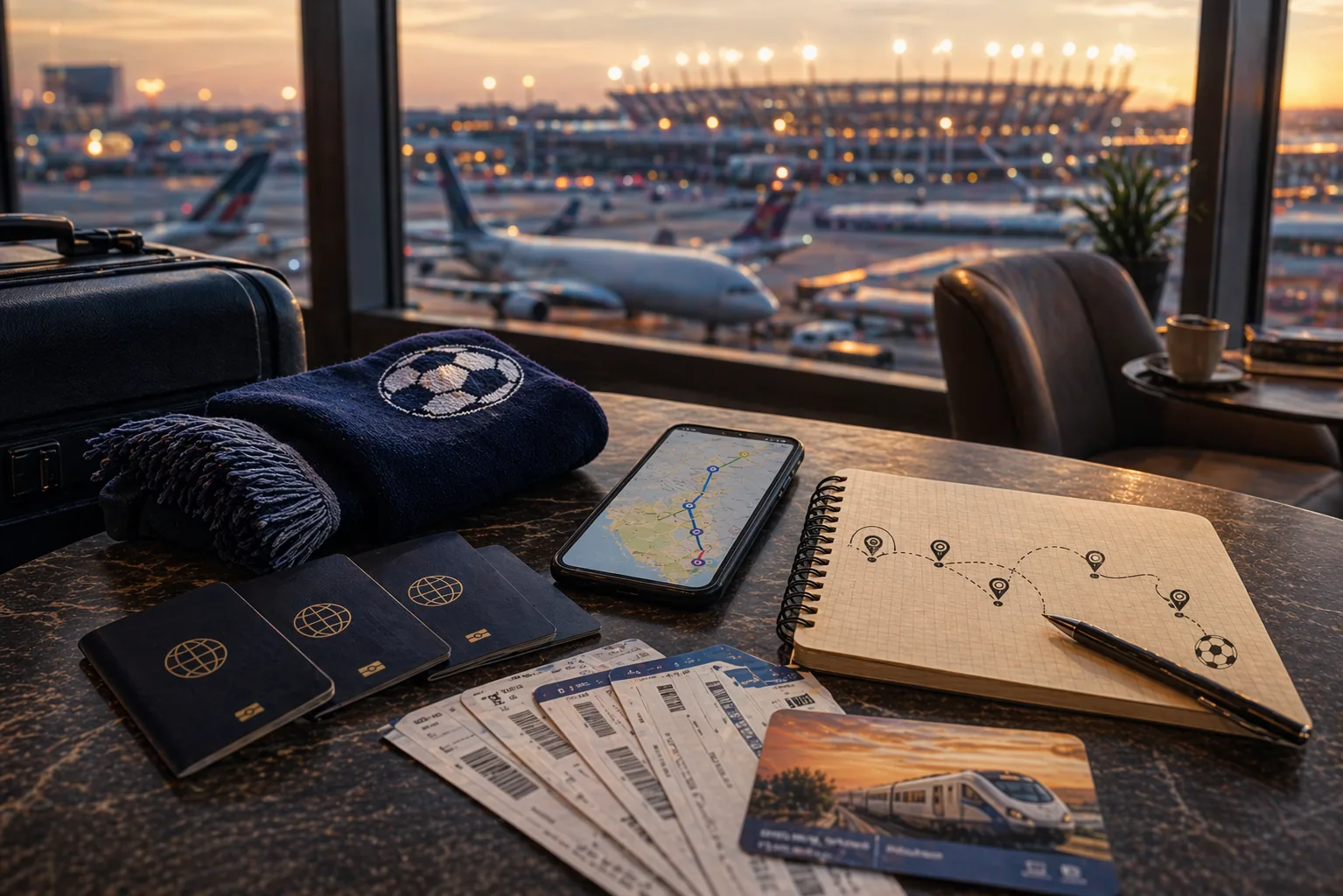
A World Cup 2026 three countries travel plan is possible, yet it needs real structure. The United States, Canada, and Mexico each run their own entry system. Fans must treat the route like three separate border checks inside one tournament.
The idea is exciting because no past World Cup has spread across three host countries like this. Still, the route only works when tickets, visas, and transfer days line up. A rushed border move can undo a great match plan very quickly.
Fans should begin with the FIFA World Cup 2026 hub before they chase the full three-country dream. That keeps the route tied to real tickets and real city order. Big travel plans work best when the first step stays simple.
Can you really do all three countries in one trip
Yes, many fans can do it if they build the route with enough time. The key is to lock the hardest entry step first and treat every crossing like a separate travel day. That rhythm gives the trip a better chance to hold together.
Some passports can use simpler electronic approval in one country and a full visitor visa in another. Others may need more lead time in all three places. That is why one border rule can never stand in for the whole route.
Fans should also think about how the route will feel after the second border, not only the first. Energy drops when the trip keeps resetting at airports and hotel desks. A good three-country plan leaves enough margin to enjoy the matches too.
| Country | Main Entry Check | Travel Risk | Best Planning Move |
|---|---|---|---|
| United States | ESTA or visitor visa | Appointment timing for some fans | Confirm status early |
| Canada | eTA or visitor visa | Wrong airline document assumption | Check passport rules by country |
| Mexico | Visa or exemption path | Assuming prior approval carries over | Verify your own exemption route |
| Land borders | Passport and supporting documents | Delay on crossing day | Avoid same-day match crossings |
Which country should you lock first
Start with the country that has the strictest or slowest entry step for your passport. For many fans, that may be the United States because visa appointments can take time. For others, Canada or Mexico may be the part that needs the deeper check.
After that, build the route around confirmed tickets rather than dream itineraries. The wider World Cup 2026 travel planning helps map city logic after the document side is clear. This order protects both the budget and the calendar.
Why same-day border crossings are risky
Crossing a border on the morning of a match is usually a bad bet. Airport delays, land checks, baggage issues, and city transfers can all stack up. Even one small delay can erase the whole margin before kickoff.
Fans should use a buffer day when moving from one country to another. That rule matters even more when the next stop is a stadium city with long final transfers. Border days should stay clean and low-pressure.
How to plan the visa side without confusion
The United States does not share its entry system with Canada or Mexico. Canada does not use the same approval as the United States. Mexico also keeps its own visa and exemption rules.
Fans should check each step separately and keep evidence easy to reach during the trip. The USA World Cup visa requirements, Canada World Cup visa requirements, and Mexico World Cup visa requirements are the right starting points before any non-refundable booking.
What kind of route works best
The best three-country route is usually linear, not chaotic. Fans should avoid doubling back into a country they already left unless the ticket value is very high. Every repeat border move adds more stress than it first appears.
One smart pattern is to keep one country as the main base and use the others for selected match windows. Another is to group nearby regional cities before the next border jump. The trip feels much easier when every crossing has a clear reason.
Fans should also leave room for a problem day. One extra night often protects more value than one extra host city. In a three-country route, that margin is part of the plan, not wasted time.
Booking order matters as much as geography. Lock the hardest entry step, then the highest-value match, then the hotel around that match. Once those pieces are stable, the rest of the route becomes easier to judge.
Tickets, phones, and airport admin
Ticket access should be checked before each border move. A working phone, stable data plan, and power backup matter more when the trip spans several systems. Small tech mistakes feel bigger when the route is already tight.
Airlines may also ask for different document checks at each stage. Fans should keep passport details, approvals, and hotel bookings ready in one clean folder. That habit can save a lot of time at the desk.
Frequently Asked Questions
Can fans attend World Cup 2026 matches in all three countries?
Yes, fans can do it if tickets, passport rules, and border timing are planned early enough.
What is the biggest risk in a three-country World Cup trip?
The biggest risk is treating entry rules like one system when each country runs its own visa and border checks.
Should fans cross borders on matchday?
That is usually a bad idea because border checks, flight delays, and airport transfers can break the whole day.
Which country should fans lock first in the route?
Lock the country with the hardest entry step first, then build the rest of the route around confirmed tickets.
Conclusion
A three-country World Cup trip is ambitious, yet it can absolutely work. The route just needs to respect each border as its own travel problem. Once that mindset is clear, the rest becomes much easier.
Lock the hardest entry step first, protect every border move with time, and let the tickets lead. Fans who do that give themselves a real chance to enjoy all three hosts. The dream works best when the admin is calm.