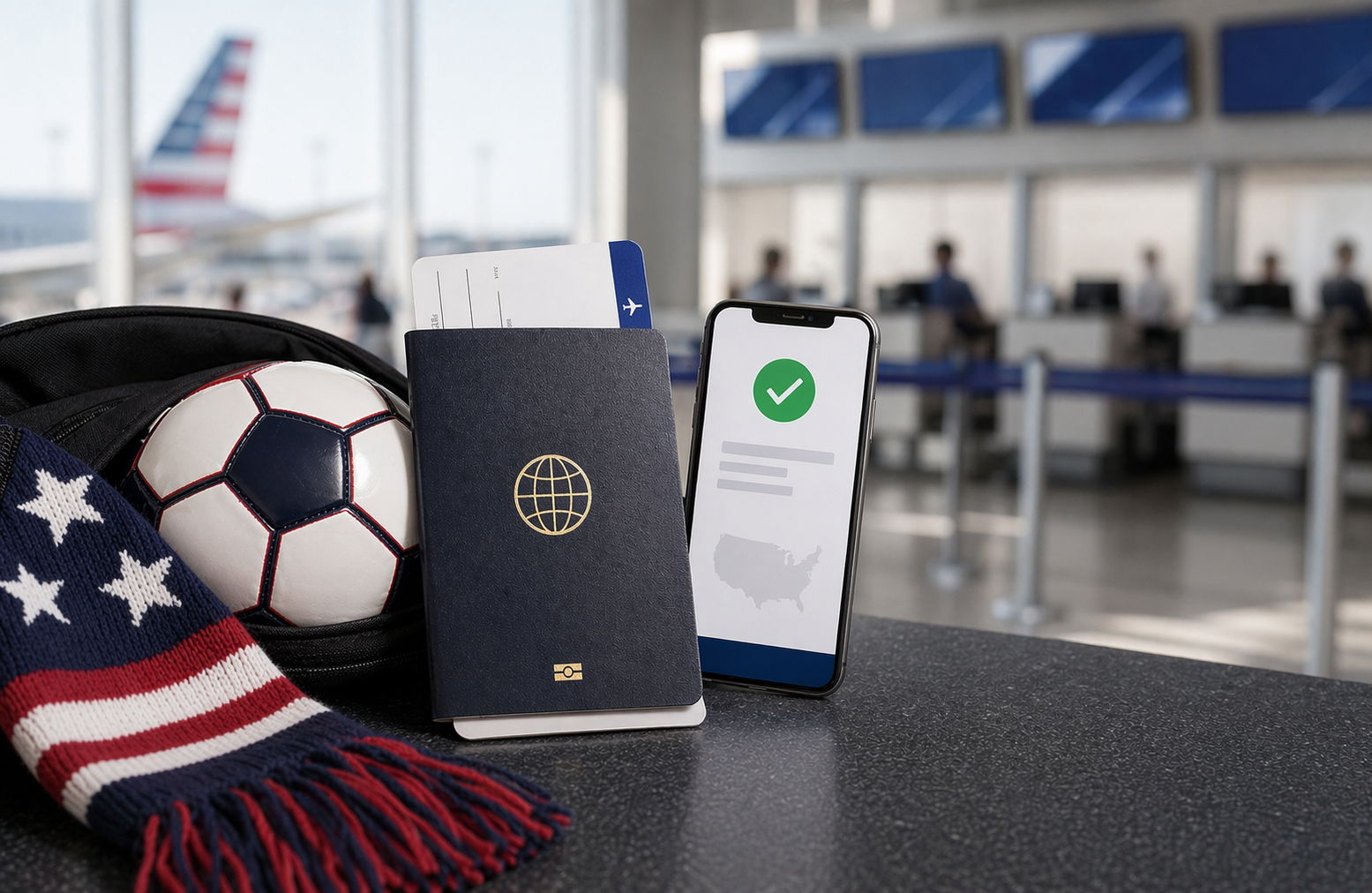
African fans World Cup 2026 USA visa planning starts with passport nationality. Based on the current Visa Waiver Program list, no African country is included. That means most African supporters need a B-2 or B-1/B-2 visitor visa.
Rules also changed on January 1, 2026 for several African nationalities. Some countries now face full suspensions, while others face partial suspensions for visitor visas. So fans should check passport-specific rules before buying non-refundable travel.
African fans World Cup 2026 USA visa rules
Most African passport holders follow the regular U.S. visitor visa route for tourism. That route usually means DS-160, a fee payment, document preparation, and an interview. Wait times can differ sharply from one embassy to another.
Dual nationality can change the answer. The U.S. suspension notice says dual nationals using a passport not subject to suspension are an exception. The route still depends on the passport used for travel and the rules tied to it.
Quick answer
Most African fans need a visitor visa for U.S. World Cup travel. A match ticket does not replace that process. It also does not guarantee that a visa will be issued.
The strictest issue is the January 1, 2026 suspension update. Fans from affected countries should review the official country list before making final plans. The broader visa-free countries guide helps compare all three hosts.
Why most African fans need a U.S. visitor visa
The U.S. Visitor Visa page says foreign nationals usually need a visa for temporary tourism unless they qualify for visa-free entry. The visa-free route is the Visa Waiver Program with ESTA approval. Based on the official list, no African country currently appears in that program.
That leaves the standard visitor visa route for most supporters. Tourism falls under B-2, while some travelers receive a combined B-1/B-2 visa. Fans following several U.S. venues should line this up early with the World Cup 2026 schedule.
| Passport Situation | Likely Route | Key Point |
|---|---|---|
| African passport not listed in 2026 suspensions | B-2 or B-1/B-2 visitor visa | Regular visitor visa process usually applies |
| African passport in partial suspension list | yet to be confirmed | B-1/B-2 visitor visa issuance is partially suspended as of January 1, 2026 |
| African passport in full suspension list | yet to be confirmed | Visitor visa issuance is fully suspended with limited exceptions |
| Dual national with non-suspended passport | Depends on travel passport | Official suspension notice lists this as an exception |
| Applying outside country of residence | Possible in some cases | It may be harder to show qualifications outside your home country |
January 1, 2026 suspension update for African nationals
The current U.S. notice says Presidential Proclamation 10998 took effect on January 1, 2026. It fully suspended visa issuance to nationals of several countries, and it partially suspended visitor visa issuance to others. This is the biggest extra risk for African fans heading to U.S. matches.
The notice lists exceptions for certain diplomats, lawful permanent residents, and dual nationals using another passport. It also covers participants in certain major sporting events. It does not say general spectators are part of that sporting event exception. Fans should not assume match tickets create a waiver.
| Country | 2026 Status |
|---|---|
| Angola | Partial suspension |
| Benin | Partial suspension |
| Burkina Faso | Full suspension |
| Burundi | Partial suspension |
| Chad | Full suspension |
| Cote D'Ivoire | Partial suspension |
| Republic of the Congo | Full suspension |
| Equatorial Guinea | Full suspension |
| Eritrea | Full suspension |
| Gabon | Partial suspension |
| The Gambia | Partial suspension |
| Libya | Full suspension |
| Malawi | Partial suspension |
| Mali | Full suspension |
| Mauritania | Partial suspension |
| Niger | Full suspension |
| Nigeria | Partial suspension |
| Senegal | Partial suspension |
| Sierra Leone | Full suspension |
| Somalia | Full suspension |
| South Sudan | Full suspension |
| Sudan | Full suspension |
| Tanzania | Partial suspension |
| Togo | Partial suspension |
| Zambia | Partial suspension |
| Zimbabwe | Partial suspension |
How African fans should apply
The U.S. visitor visa process starts with the DS-160 form and a photo upload. Interviews are generally required, with limited exceptions. The official guidance says applicants should usually interview in the country where they live.
Fans can sometimes apply at another embassy or consulate where they will be present. Yet the same official page warns that it may be harder to show qualifications there. For the regular visitor route, start with the USA visa guide.
Documents African supporters should prepare
The official checklist starts with a passport valid for at least six months beyond the stay, unless an exemption applies. Applicants also need the DS-160 confirmation page, fee receipt where required, and a compliant photo. Extra documents may be requested for the trip purpose, ability to pay, and intent to depart.
Employment records, family ties, return plans, and trip funding can help explain the visit. A clean itinerary also matters, especially for multi-city travel. The main FIFA World Cup 2026 hub can help map that route.
When to apply and what to expect
U.S. visa wait times vary by location, season, and visa category. The State Department says estimates can change from week to week. Because of that, African fans should apply as early as possible.
Expedited interviews are limited to urgent unforeseen cases. The wait-time guidance says you must first submit DS-160, pay the fee, and schedule the first available appointment. Only then will a consular section review an expedite request.
Match tickets and port-of-entry checks
The visitor visa page says there is no guarantee a visa will be issued. It also says fans should not make final travel plans or buy tickets until the visa is approved. That advice matters even more where suspensions or long waits apply.
A visa also does not guarantee admission at the airport or land border. U.S. border officers make the final decision at entry. So supporters should travel with organized booking details, onward plans, and match information.
Frequently Asked Questions
Do African fans need a USA visa for World Cup 2026?
Most African passport holders need a B-2 or B-1/B-2 visitor visa for U.S. World Cup travel.
Can African fans use ESTA for World Cup 2026?
Based on the current Visa Waiver Program list, no African country is included.
Which African countries face 2026 U.S. visa suspensions?
As of January 1, 2026, some African nationals face full suspensions and others face partial suspensions for visitor visas.
When should African fans apply for a USA visa?
Apply as early as possible because interview wait times vary by embassy, season, and visa category.
Does a match ticket guarantee a U.S. visa or entry?
No. A ticket does not guarantee visa issuance, and a visa does not guarantee admission at the port of entry.
Conclusion
African fans should treat U.S. visa planning as an early task, not a late one. Most passports still need the standard visitor visa route. Some passports now face added restrictions from January 1, 2026.
The safest route is country-specific checking, early application, and realistic travel booking. Once the visa side is clear, match planning becomes far easier. That gives fans a better shot at a smooth U.S. trip.