
2026 FIFA World Cup sponsors and host city supporters now sit inside a two-layer commercial structure. FIFA expects $2.8 billion in marketing-rights revenue across its current four-year phase, with most of that total tied to the North American tournament. The model combines global sponsorship tiers with a city-level supporter program built for local funding and activation. That makes the business plan part of how the event will feel on the ground, not just how it will look in boardrooms.
How the 2026 sponsorship structure is built
FIFA is using four commercial designations around the tournament: FIFA partners, World Cup sponsors, World Cup supporters and official suppliers. That tiered structure matters because the 2026 event is larger than any previous edition, with 16 markets spread across the United States, Canada and Mexico. A layered system gives the governing body room to sell broad tournament rights while still protecting category control. It also gives organizers a clearer way to separate global commercial rights from local activity.
That split is important because the World Cup business story is no longer only about a single list of global backers. The tournament needs a commercial model that can operate across borders and still adapt to local demands. So the global tiers handle the broad event platform, while city-specific support can focus on local delivery. Readers tracking the wider FIFA World Cup 2026 build-up can already see how commercial planning is becoming a core part of tournament operations.
What the host city supporters program actually does
FIFA introduced a Host City Supporters program for the 2026 tournament so organizers in each of the 16 markets can raise money to help cover hosting costs. Each city can designate up to 10 companies, provided those businesses do not compete with FIFA official partners. That rule keeps the local program open enough to raise funds, yet still protects the categories already sold at tournament level. It is a practical compromise between local commercial freedom and central rights control.
The supporter role is not abstract. Approved companies can use city-specific marks to promote their backing of the tournament, and they are expected to show up at fan festivals within their local market. That means the program will shape the public-facing side of the event as well as the balance sheet. A strong World Cup host cities will eventually need to account for these local supporter programs because they can influence how each market presents the tournament to visiting fans.
Why stadium work still sits inside the same story
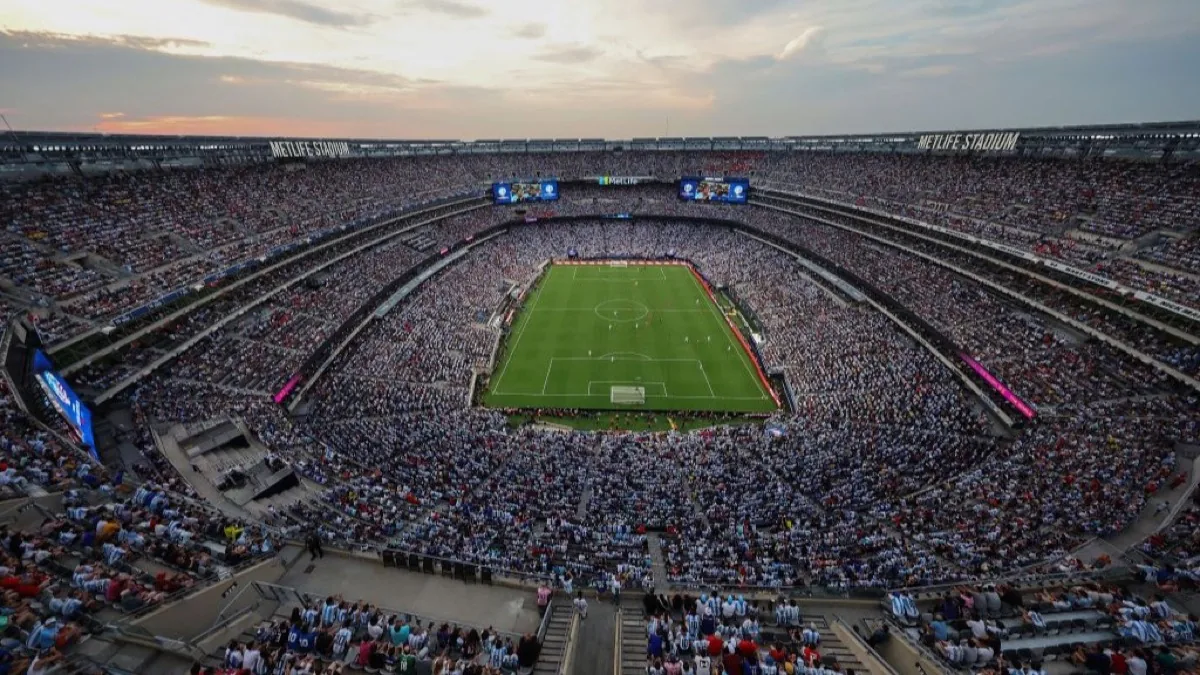
The sponsorship structure matters even more because the 2026 men's World Cup will be the first in 20 years without any newly built stadiums. Instead, the tournament is relying on existing venues across North America, with all 16 sites going through some form of adjustment before kickoff. That means the business side and the infrastructure side are moving together rather than separately. Commercial funding and local support matter because venue preparation still costs real money and coordination.
Some venues are facing lighter tweaks, while others are taking on more substantial work. Toronto's BMO Field and Mexico City's Estadio Azteca are both in the extensive-renovation category. That gives the commercial story a direct physical link to the tournament footprint. Anyone following the World Cup stadiums, the recent World Cup base camps and the World Cup broadcasting plans can see the same pattern: the 2026 World Cup is being scaled through existing assets, not by starting from scratch.
What this means for fans and host cities
Fans are likely to notice the Host City Supporters program through festival branding, local promotions and city-specific event presentation rather than through formal rights language. That is where the local layer becomes visible. A tournament spread across three countries cannot feel identical in every market, and FIFA appears to be accepting that reality instead of forcing a fully uniform model. The supporter program gives each city some room to fund and shape its own version of the event environment.
For host cities, the takeaway is straightforward. The 2026 World Cup is not being funded only through FIFA's top sponsor tiers. It is also being supported through local commercial relationships designed to help cities carry the weight of hosting. That approach should matter long after kickoff because it affects fan festivals, venue readiness and the day-to-day delivery standards each city will be judged on.
Frequently Asked Questions
What are the commercial tiers for the 2026 World Cup?
FIFA has four designations in place: FIFA partners, World Cup sponsors, World Cup supporters and official suppliers.
What is the Host City Supporters program?
It is a 2026 program that lets each host city raise funding through approved local sponsorship sales tied to that city.
How many host city supporters can each market appoint?
Each host city can designate up to 10 companies that do not compete with FIFA official partners.
Are new stadiums being built for the 2026 men's World Cup?
No. The tournament is set to be the first men's World Cup in 20 years without newly built stadiums, though all 16 venues are being adjusted and some are undergoing major renovations.
2026 FIFA World Cup sponsors and host city supporters are now part of the same delivery story. Global rights still matter, yet local commercial support is becoming just as important to how each market stages the event.
That makes the supporter program more than a business footnote. It is one of the clearest signs that the 2026 World Cup will be built through local execution as much as tournament-wide scale.
Stay tuned to FWCLive.com for more <a href="/">World Cup 2026</a> business, city and stadium updates.
Stay tuned to FWCLive.com for the latest FIFA World Cup 2026 updates.
Read Also: World Cup 2026 sponsors grow beyond FIFA-wide deals