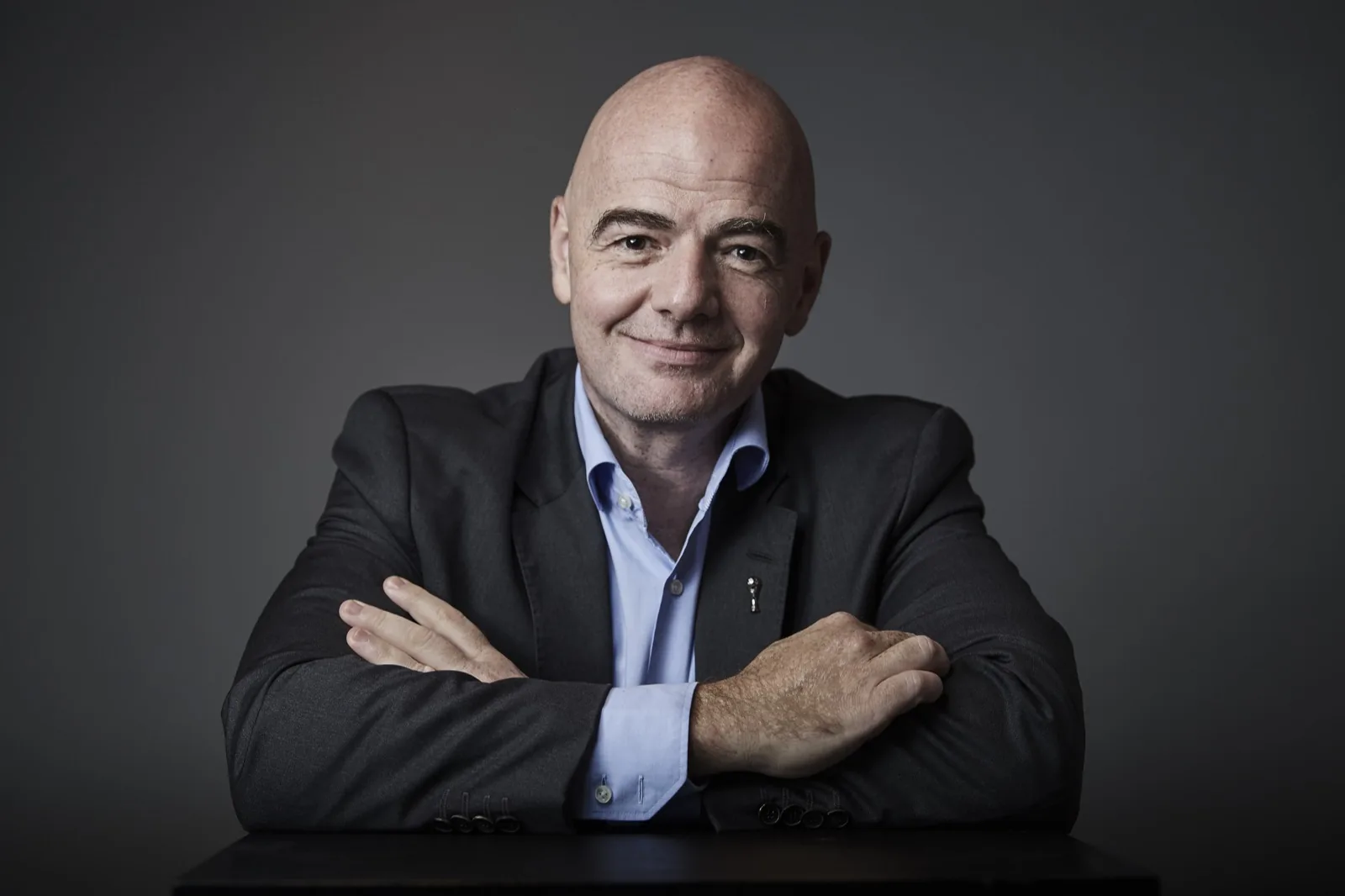
The FIFA World Cup 2026 executive team is broader than a normal tournament leadership group. Gianni Infantino still sets the political and commercial direction, yet the event is now so large that power is spread across operations, governance, business and pitch management. That reflects the scale of a 48-team, 104-match tournament across three countries. The story is no longer only about one president. It is about the network around him.
Why FIFA needs a wider leadership bench
World Cup 2026 is the biggest event FIFA has ever tried to deliver. The format expands from 32 to 48 teams and from 64 to 104 matches, while the competition stretches across 16 World Cup host cities in Canada, Mexico and the United States. FIFA has also budgeted record revenue for the 2023 to 2026 phase, with the World Cup acting as the main commercial engine. A tournament at that scale cannot run through one office alone.
That is why the leadership picture now includes specialists across competition governance, event operations, business strategy and venue delivery. The executive shape tells you what FIFA sees as the major risks. Scheduling, sponsorship, media rights, host-city coordination and playing surfaces all sit on the critical path. If any one of those areas slips, the tournament feels it quickly.
Who is carrying the biggest roles
Infantino remains the political center of the project and the public face of FIFA’s expansion agenda. Mattias Grafström, now formally appointed as FIFA secretary general, sits over the administrative and governance layer. Romy Gai carries the commercial brief through sponsorship, licensing and media rights. That work matters because the event’s revenue expectations are unprecedented and the tournament’s business model is still expanding.
Heimo Schirgi handles the operations side as one of the main links between FIFA headquarters and the tournament structure in Miami. Amy Hopfinger and Manolo Zubiria sit closer to the host-city and competition-delivery lane, while Alan Ferguson carries responsibility for pitch quality across venues. Carlos Cordeiro and Victor Montagliani also matter because they help connect FIFA to political and federation partners in North America. This is a true executive web, not a single chain.
Why business and operations now overlap
The business side of the tournament cannot be separated from its operations anymore. Sponsorship and rights growth are tied to how smooth the event feels for fans, broadcasters and partners. The recent World Cup sponsor map and World Cup broadcasting plans both point in the same direction. Commercial scale rises only when delivery looks credible.
That overlap also explains why FIFA is willing to put more attention on fan-facing programs like the recent World Cup stadium tours. Those initiatives build public engagement, yet they also test how FIFA’s business and operations teams work together. The same tournament that sells rights and hospitality also has to manage movement, scheduling and venue quality at a record scale.
What this means for the tournament run-in
As kickoff gets closer, the success of World Cup 2026 will depend on whether FIFA’s executive bench can stay aligned. Governance has to support operations. Commercial ambition has to fit practical delivery. Venue standards have to hold across different stadium types and climates. Those are hard coordination problems, not just branding exercises.
The main takeaway is simple. The tournament is now being shaped by a deep FIFA leadership group rather than a narrow circle at the top. That is a sign of scale, yet it is also a test of control. The bigger the event becomes, the more important those internal handoffs become.
Frequently Asked Questions
Who leads the FIFA World Cup 2026 executive team?
Gianni Infantino remains the senior political figure, supported by a wider leadership group across governance, operations and business.
What does Mattias Grafström do?
He is FIFA secretary general and oversees the administrative and governance side of the organization.
Why is Heimo Schirgi important?
He is a central operations leader who links FIFA headquarters with the tournament structure and host-city delivery work.
Why is FIFA using a broader executive group for 2026?
The tournament is larger than any previous edition, with more teams, more matches and a much heavier commercial and operational load.
World Cup 2026 is too large to be run through a single public figure. FIFA’s executive structure now reflects that reality.
The outcome will depend on how well those leaders connect strategy, business and operations. That coordination is now one of the tournament’s biggest hidden stories.
Keep following FWCLive.com for the latest <a href="/">World Cup 2026</a> planning coverage.
Stay tuned to FWCLive.com for the latest FIFA World Cup 2026 updates.
Read Also: U.S. World Cup 2026 task force takes a bigger role under Trump and Giuliani