

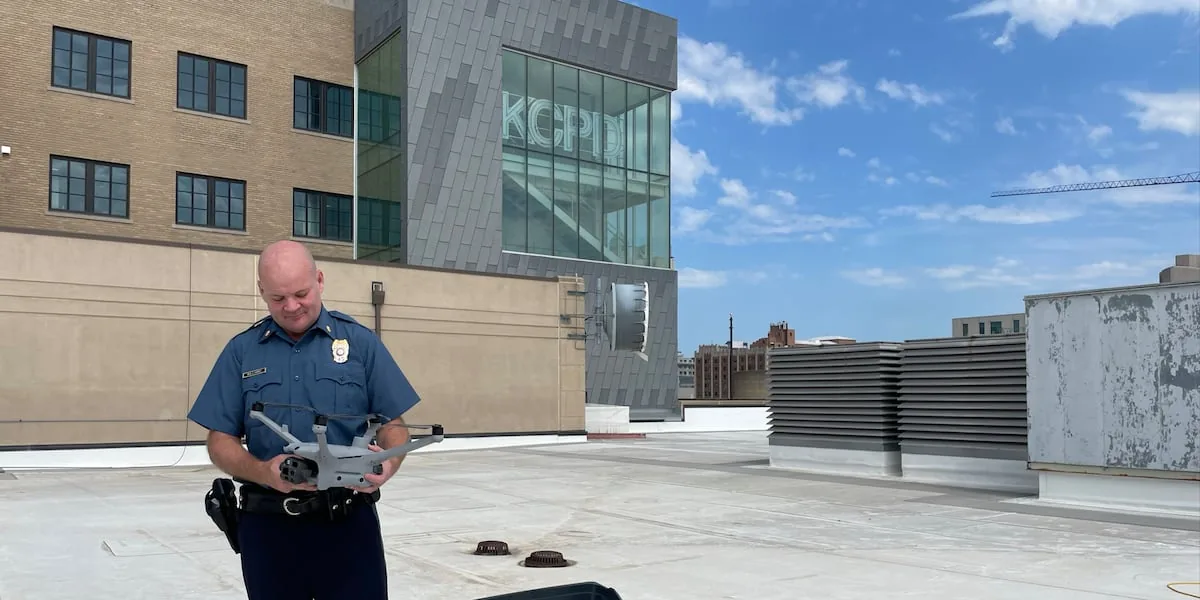
Kansas City police say their World Cup drone program is now fully operational before tournament summer. The city is using aerial capability as part of its final security preparation for major event crowds. That matters because a host city must manage wide public spaces, traffic movements, and incident response at the same time. For FIFA World Cup 2026, surveillance and coordination tools are becoming a bigger part of local readiness.
Why a drone program matters in this setting
A World Cup host city has to monitor more than one fixed location. Supporter movement spreads across roads, fan areas, hotels, and stadium approach routes. A fully operational drone programme can help police build a wider view of those moving pieces. So the update matters because it adds mobility to the city's event-response picture.
The source frames the programme as specifically ready ahead of the tournament, which is the key point. It is not being presented as a distant technology plan. It is being presented as an active tool that can support the host period. That shifts the story from procurement to operations.
How it fits into Kansas City's security build
Kansas City has been layering different forms of event preparation as the tournament approaches. Emergency drills, transport work, and public-build momentum have all become part of the host-city narrative. The drone programme fits neatly into that structure because it strengthens one of the hardest parts of event control, which is real-time visibility. Security planning is stronger when teams can see changing situations quickly.
That also means the programme is most useful when combined with other systems. Aerial support does not replace trained responders on the ground. Instead, it helps direct them more effectively when large crowds or disrupted routes complicate the picture. In that sense, the drone plan is part of a broader Kansas City operations model rather than a standalone headline.
Why the timing matters before the tournament
There is a major difference between launching something during an event year and saying it is fully operational just before the tournament. The latter suggests testing, staffing, and deployment planning have moved further along. That is why the timing itself is newsworthy. Kansas City is trying to enter the last stretch with one more piece of its event-security toolkit already in working order.
This is particularly relevant because host-city stress tends to grow as the calendar tightens. By the time the World Cup schedule turns into real crowd movement, there is much less room for unfinished systems. An operational aerial programme gives police one more way to monitor how the city is functioning when pressure spikes.
What it could mean for supporters
Most supporters will never think about the technical side of an aerial security plan. What they will notice is whether public areas feel organised, whether incident response looks quick, and whether information moves clearly during busy periods. A strong drone programme is useful only if it improves those visible outcomes. So the real test will be whether fans feel the city is calm and controlled during high-traffic moments.
That is also why this kind of update belongs alongside more obvious World Cup matches headlines. The supporter experience is built on many layers that never appear on a lineup card. Security systems, road routes, and festival operations all shape the event long before kickoff. Kansas City is clearly trying to strengthen those hidden layers now.
Why this looks like a late-stage readiness marker
Cities nearing the end of their preparation phase need operational proof points. A fully functioning drone programme is one of those proof points because it suggests training and integration work have advanced beyond theory. That does not guarantee flawless delivery once the city is full. Still, it is a stronger signal than a general promise that plans are progressing.
For now, the update adds another practical marker to Kansas City's host build. The city is not only promoting the tournament. It is also tightening the systems that sit behind the event. That is exactly the kind of detail that becomes important once the crowds arrive.
Frequently Asked Questions
What did Kansas City police say about the drone programme?
Kansas City police say their drone program is now fully operational before World Cup 2026, strengthening the city's aerial event response.
Why is Kansas City World Cup drone program important now?
It can support crowd monitoring, incident awareness, and wider event coordination across the host city.
Is the drone update separate from fan-festival planning?
Yes. It is a broader security-preparation step, though it can support multiple event areas.
Kansas City is adding another operational layer to its World Cup preparation by putting aerial support fully in place. That kind of readiness can matter as much as any visible countdown campaign once the city fills up.
Stay tuned to FWCLive.com for the latest FIFA World Cup 2026 updates.
Read Also: Kansas City emergency teams rehearse before the FIFA Fan Festival crowd arrives