
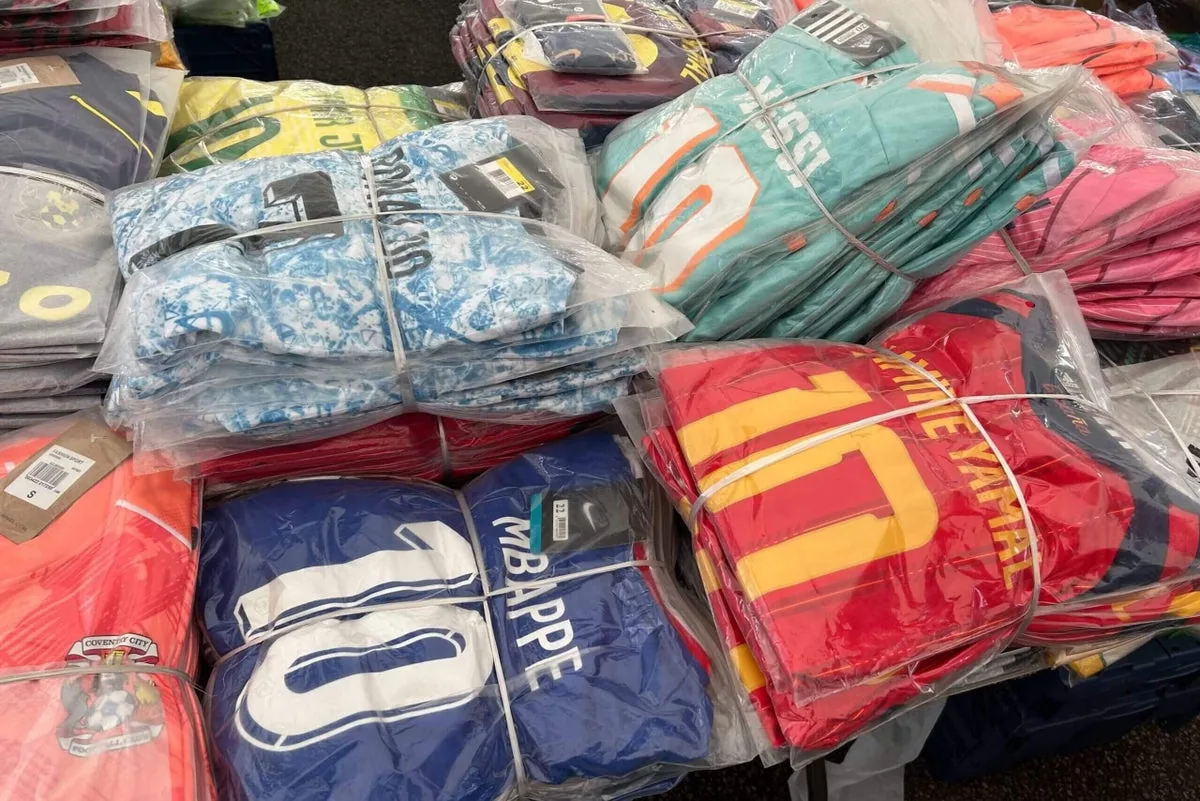
A major World Cup 2026 fake shirts crackdown removed more than 4,400 counterfeit kits from one market operation. Investigators said the seizure targeted illegal sales tied to tournament demand and found stock linked to major national teams. The case is being treated as part of a wider pre-tournament enforcement phase.
What was seized in the operation
Police reported that 4,433 items were removed from a single market stall in the Midlands. The stock included fake shirts connected to teams expected to draw high fan demand this summer. Officers also documented pricing patterns where counterfeit items were sold far below standard retail levels.
The goods were catalogued for evidence and moved to a secure location for verification work. Investigators placed the estimated legitimate-market impact at roughly £400,000.
Enforcement model before the tournament
The operation was run as part of a named pre-World Cup enforcement push and involved multiple law-enforcement partners. Officers focused on both physical stalls and online resale channels, which are expected to accelerate as kickoff approaches.
One suspect was arrested on suspicion of counterfeit distribution and later released on bail while inquiries continue. Authorities said additional interviews are planned in the same investigation stream.
Why counterfeit sales matter for fans
Investigators warned that counterfeit trade is not only a pricing issue. They linked fake-goods pipelines to larger criminal activity and highlighted product-safety concerns, including poor-quality materials. That risk is relevant for families buying low-cost items ahead of major fixtures.
As a result, enforcement messaging now combines consumer safety with anti-counterfeit policing. The objective is to reduce both demand and availability before tournament traffic peaks.
In this case, officers said the stall had been under long-term surveillance before the action day. The operation involved seven specialist officers and targeted stock moving through both physical and digital channels. Pricing evidence also showed fake kits sold at roughly a quarter of regular market value, which is one reason authorities treated the activity as organized distribution rather than casual resale.
What supporters should do next
Fans planning purchases before matchdays should use trusted retail channels and verify product authenticity before payment. Bargain pricing alone is now a clear red flag during the tournament build-up.
For broader planning, supporters can track updates through FIFA World Cup 2026, match windows on the World Cup schedule, and stadium-specific guidance in the World Cup stadiums.
Frequently Asked Questions
How many fake shirts were seized in the World Cup 2026 crackdown?
Police seized over 4,400 fake football shirts in a major pre-World Cup 2026 enforcement operation targeting counterfeit supply chains.
Where did the seizure take place?
A major World Cup 2026 fake shirts crackdown removed more than 4,400 counterfeit kits from one market operation. Investigators said the seizure targeted illegal sales tied to tournament demand and found stock linked to major national teams.
Were arrests made in the counterfeit case?
One person was arrested and later released on bail while investigations continue.
Why are counterfeit kits treated as a serious issue?
Authorities say counterfeit networks can connect to broader criminal activity and product-safety risks.
How can fans avoid fake World Cup merchandise?
Buy from trusted sellers, verify authenticity markers, and avoid deals that look far below normal retail prices.
Counterfeit activity is scaling with World Cup demand, and enforcement is scaling with it. Fans who verify purchases early will avoid last-minute fraud and protect matchday spending.
The broader signal is that enforcement teams are acting earlier than usual in the phase, not waiting for opening week pressure. That early posture can reduce counterfeit availability before fans make final travel and matchday purchases. It also raises compliance pressure on online sellers who try to move unverified stock across borders.
Pre-tournament demand is rising, so authenticity checks now matter more than ever.
Stay tuned to FWCLive.com for the latest FIFA World Cup 2026 updates.
Read Also: World Cup 2026 Kit Wave Expands As More Teams Reveal Sets