
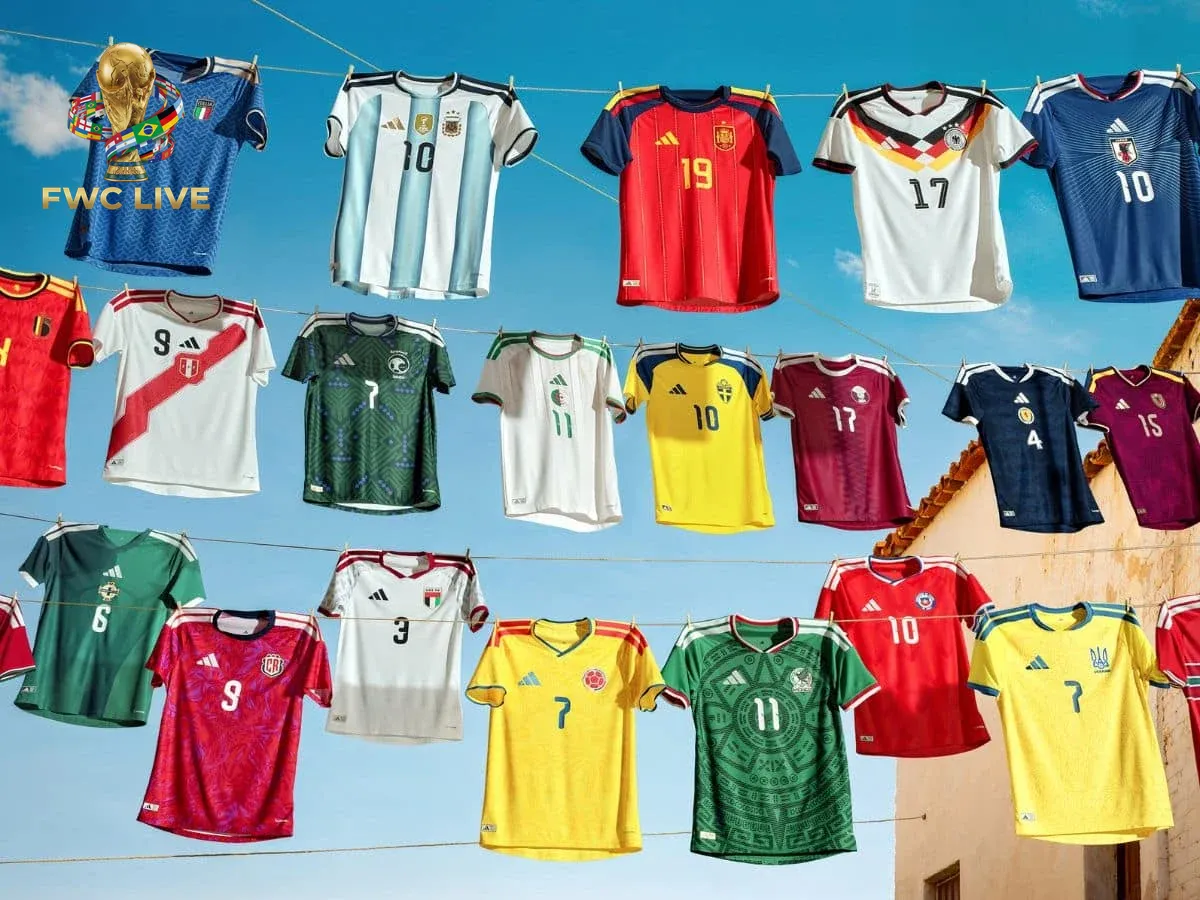
World Cup 2026 kits are now arriving in a heavier wave. Most major home and away releases have moved from teaser stage to real public rollout. Adidas, Nike, and PUMA are driving most of the current drop phase. That makes the 2026 World Cup shirt picture far clearer than it was when the earliest tournament leaks first appeared.
Why The Kit Picture Feels Clearer Now
The biggest shift is volume. A long list of major nations now have full sets in public view, including Argentina, Brazil, England, France, Germany, Portugal, Spain, Australia, and the United States. Once that many top-market teams are visible, the overall design direction of the tournament starts to feel real.
The current pattern also shows how the brands are approaching the phase. Adidas is leaning hard into heritage and cultural references. Nike is using several bolder away concepts, while PUMA is pushing more local storytelling into national-team identity. That combination gives the tournament retail landscape more range than a one-brand-dominated year would allow.
Not every team is finished yet, which is why the rollout still matters as news. Some nations are still waiting on official reveals, retail detail, or goalkeeper confirmations. That leaves the shirt market active deep into the final build-up phase rather than closing early.
Retail timing is another reason the rollout matters. Once a kit is official, supporter demand quickly moves from curiosity to purchasing decisions, especially in host cities and among qualified nations with large diaspora followings. That commercial acceleration is part of why each reveal now lands like a mini event of its own.
Which Teams Have Already Moved Furthest
Group A offers one of the clearest snapshots because Mexico kits and South Africa kits are already public alongside South Korea and Czechia. That gives one whole section an unusually complete visual identity well before the opening stretch. Supporters can compare early group-stage shirts with much less guesswork.
Canada and Switzerland have also shown full home and away sets, while Qatar has revealed its home shirt. Bosnia and Herzegovina is still waiting on a scheduled release window, which is a reminder that the tournament wardrobe is not fully locked yet. That uneven timing is normal, but it also keeps fan interest high because the reveal calendar remains live.
The Mexico national team is a useful example of how kits now feed broader tournament conversation. Once a shirt lands, discussion quickly moves from design alone to how it fits the host-nation image, commercial rollout, and likely match visibility. In this phase, the shirt reveal is part football story and part event branding story.
The remaining unreleased teams still matter because they can shift the balance of opinion late. One outstanding away shirt or goalkeeper design can suddenly reset the conversation around the strongest range in the field. So even with most major names now public, the kit phase is not closed.
Why The Kit Rollout Matters Beyond Style
World Cup shirts always outlive the tournament itself. A good design can become shorthand for a national team era, while a poor one can linger for the wrong reasons. That is why the current wave matters more than a standard retail drop around club football.
The expanded 48-team format makes the shirt map even more important. More nations mean more visual identities, more supplier battles, and more ways for brands to attach themselves to the tournament mood. That commercial layer is now part of the event build-up whether fans care about fashion or not.
For readers tracking the best kits fan vote, the current phase is useful because the shortlist is no longer guesswork. Most of the heavyweight releases are now visible enough to compare properly. The remaining reveals should still move the rankings, yet the tournament's main design tone is already taking shape.
That keeps the story alive for both brands and supporters. Every new shirt now feeds a wider comparison set rather than landing in isolation. By the time the final few releases arrive, fans will already have a strong sense of which nations have won the design race.
Frequently Asked Questions
What changed with World Cup 2026 kits?
The tournament shirt rollout has moved into a fuller phase, with most major brands now showing a much clearer World Cup picture.
Why is World Cup 2026 kits important now?
World Cup 2026 kits are now arriving in a heavier wave because most major home and away releases have moved from teaser stage to real public rollout.
What should fans watch next on World Cup 2026 kits?
The biggest shift is volume. A long list of major nations now have full sets in public view, including Argentina, Brazil, England, France, Germany, Portugal, Spain, Australia, and the United States.
The World Cup 2026 kit rollout has moved from scattered reveals to a recognisable full-market wave. With more teams now public and a few still pending, the shirt conversation should stay live right up to kickoff.
Stay tuned to FWCLive.com for the latest FIFA World Cup 2026 updates.
Read Also: World Cup 2026 Hydration Breaks Open New Ad Windows