
World Cup 2026 red card rules have changed after FIFA and IFAB approved two new conduct triggers before the tournament. One targets players who cover their mouths during confrontations. The other targets walk-offs in protest at referee decisions, giving FIFA World Cup 2026 a sharper disciplinary framework. Players, coaches, and officials now have far less room to test the boundary.
What The New Dismissal Triggers Cover
The first change deals with mouth covering during confrontations with opponents. Competition organisers can now allow referees to punish that act with a red card. The logic is simple: the move can be used to hide discriminatory language or other abusive conduct.
The second change covers players who leave the field in protest at a referee's decision. Referees can now send them off for that act as well. Team officials who incite players to walk off are also included in the new wording.
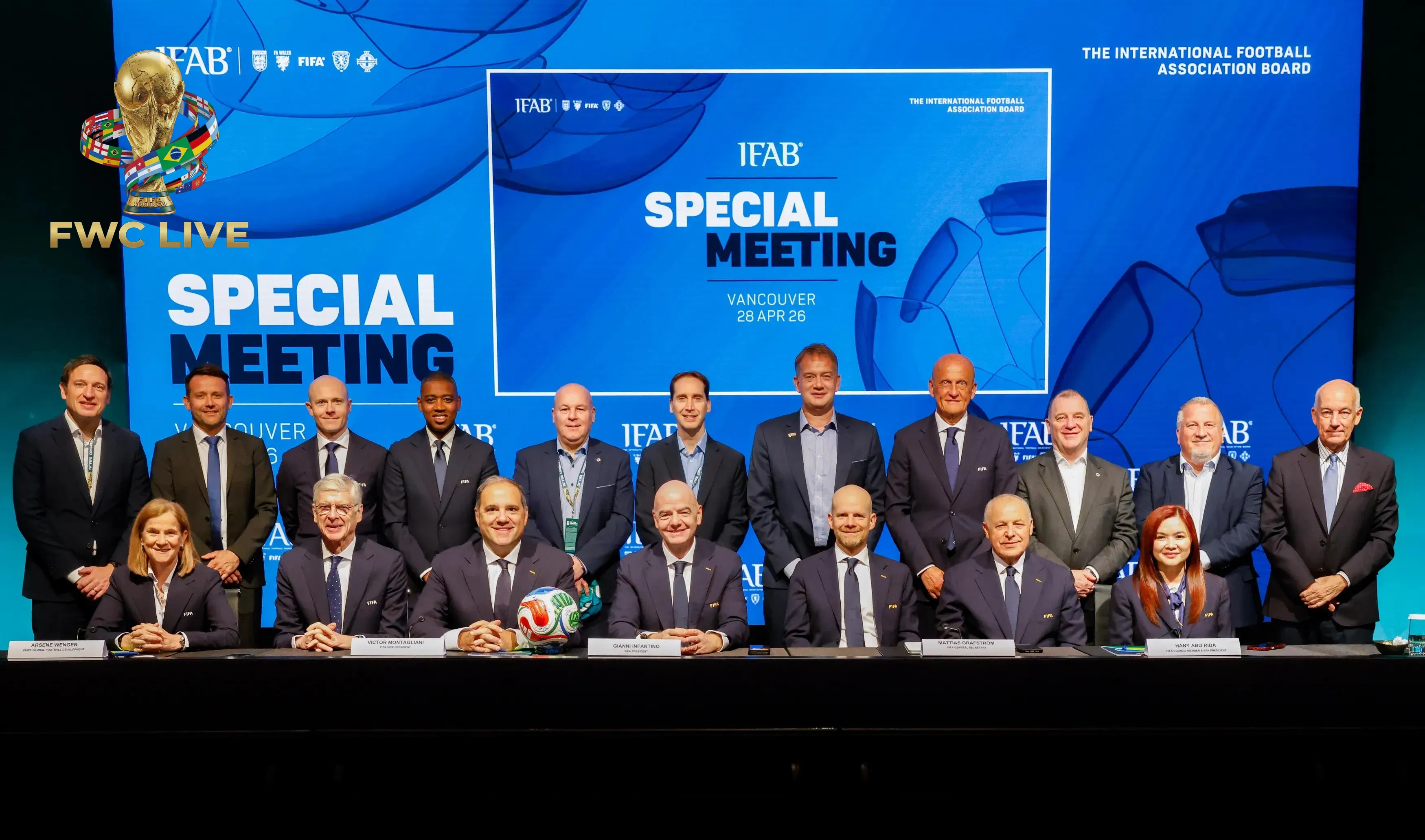
These are not soft guidance notes. They are law amendments approved at a special IFAB meeting in Vancouver after FIFA-led consultation. That gives the rules real tournament force rather than optional messaging.
The wording matters because it targets behavior in the moment of confrontation, not only the underlying insult. Referees can now act on a visible concealment gesture when tournament rules adopt the amendment. That gives officials a more practical enforcement tool.
Why FIFA Wanted The Change Before 2026
FIFA clearly wants fewer grey zones around player behaviour at a tournament with 48 teams and far more matches. Hidden abuse and organised walk-off pressure can escalate quickly in heated moments. By defining both acts more directly, officials get a clearer route to intervene early.
The protest rule also protects match continuity. FIFA says a team that causes a match abandonment will, in principle, forfeit the game. That warning gives the new law extra bite because it reaches beyond one dismissal and into the result itself.
Readers who followed the yellow card amnesty discussion will notice the same pattern. FIFA is trying to reduce avoidable uncertainty before the first ball is kicked. This time the target is not suspension timing, but visible control over confrontations and protests.
The 48-team format makes that control even more valuable. More matches create more pressure points, more benches, and more emotional protest scenes. FIFA clearly wants officials entering June with fewer gaps in their authority.
How This Could Shape Tournament Behaviour
The biggest impact may come before any card is shown. Players and staff now know that dramatic protest behaviour can carry immediate expulsion risk. That should change the tone of certain flashpoints, especially in high-pressure knockout games.
Referees still need consistency because discretion remains part of the process. Not every emotional reaction will become a red card. Even so, the line is now far firmer than it was before this law package arrived.
That makes the World Cup schedule easier to protect from disorder, but it also raises the standard for discipline across all 104 matches. Teams will receive the amendments before the tournament, so nobody should arrive in June claiming surprise.
Teams will need to coach these boundaries before arriving in camp. One avoidable dismissal can distort a whole group-stage game. In knockout football, the same mistake could end a tournament run in minutes.
That preparation work may feel small now, yet it can save a team from a reckless collapse later. Captains will need to pull teammates back faster after disputed calls. Staff on the touchline also have to model restraint because the new language reaches them too.
Frequently Asked Questions
What changed with World Cup 2026 red card rules?
FIFA and IFAB have approved two fresh dismissal triggers that can directly affect player conduct at the 2026 tournament.
Why is World Cup 2026 red card rules important now?
World Cup 2026 red card rules have changed after FIFA and IFAB approved two new conduct triggers before the tournament.
What should fans watch next on World Cup 2026 red card rules?
The first change deals with mouth covering during confrontations with opponents. Competition organisers can now allow referees to punish that act with a red card.
FIFA has chosen clarity over ambiguity with these pre-tournament law changes. If the rules are applied consistently, World Cup 2026 should see faster control of the most volatile protest moments.
Even disciplined teams will now need clearer on-field leadership when tempers spike around a major call.
Stay tuned to FWCLive.com for the latest FIFA World Cup 2026 updates.