
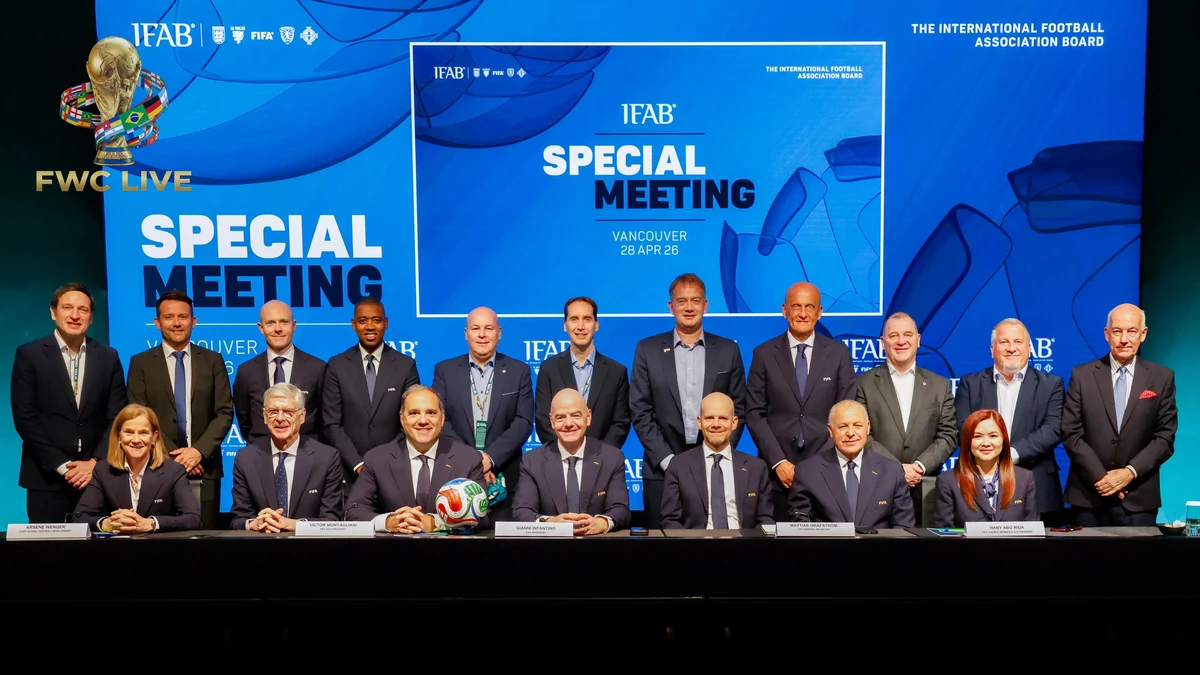
The World Cup 2026 red card protest rule is no longer just a proposal. IFAB approved the measure at a special meeting in Vancouver on April 28, which means competition organisers can now dismiss players who cover their mouths during confrontations or leave the field in protest at a referee decision. That is a significant late-stage conduct change because the tournament begins on June 11. For FIFA World Cup 2026, player behaviour is now under a much tighter disciplinary lens.
What IFAB has now approved
IFAB said players who cover their mouth in a confrontational situation with an opponent may be sanctioned with a red card at the discretion of the competition organiser. The same discretion now applies to players who leave the field of play in protest at a referee decision. IFAB also extended the rule to team officials who incite players to walk off. That gives referees and organisers a much stronger response than a warning or routine caution.
The wording matters because it moves the issue out of consultation mode and into an approved law change for the coming tournament cycle. FIFA had already signalled in February that it wanted tougher measures on protest behaviour. Now that step has been formally taken. The new rule will be communicated to all 48 participating teams in the coming weeks.
Why FIFA pushed for the change before kickoff
The background to this story started at IFAB's February annual general meeting, where FIFA and IFAB said further consultation would be held on covered-mouth confrontations and walk-off protests. The concern was not only time-wasting or dissent. FIFA framed the issue around discriminatory and inappropriate behaviour that can be hidden during close-range confrontations. That is why the final measure is tougher than many expected.
The timing is important because World Cup 2026 already has several competition-rule stories building at once. The earlier World Cup 2026 yellow card amnesty discussion focused on how suspensions might become fairer in an expanded tournament. This new decision goes in the other direction. It gives referees a sharper punishment tool when behaviour is judged unacceptable.
How the rule could change big-match behaviour
Players and staff will now have to think more carefully during the most emotional moments of knockout football. A walk-off threat or a tightly covered verbal confrontation can no longer be treated as a vague grey area. If the competition chooses to apply the law aggressively, a player could be sent off before a confrontation escalates further. That alone should change the tone of some disputes.
This is especially relevant in a tournament with a long knockout path and a packed FIFA World Cup 2026 match schedule. Managers already have to handle fatigue, suspensions and travel. Now they also need to brief players on a stricter conduct line around referees and opponents. In a narrow elimination match, one dismissal for protest behaviour could be decisive.
The forfeit threat makes the rule bigger than one red card
IFAB also said a team that causes a match to be abandoned will, in principle, forfeit the game. That turns the rule into more than a discipline tweak for individuals. It creates a direct team-level risk if a protest spirals into a collective walk-off. That is the strongest sign yet that FIFA wants to close off any repeat of organised on-field protest actions during its biggest event.
The practical result is clear. World Cup 2026 teams will enter the tournament with less room for emotional theatre around officiating decisions. They can still challenge, appeal and complain through normal channels, yet leaving the pitch or using hidden confrontation tactics now carries a much more serious threat. That makes this one of the most important confirmed rule changes of the final pre-tournament period.
Frequently Asked Questions
What is the World Cup 2026 red card protest rule?
It is an IFAB-approved rule allowing red cards for covered-mouth confrontations and for players who leave the pitch in protest at a referee decision.
Will the new rule apply at FIFA World Cup 2026?
Yes. IFAB said the measures will be implemented at the tournament and communicated to the 48 teams.
Can team officials also be punished under the new rule?
Yes. Team officials who incite players to leave the field in protest can also be sanctioned.
What happens if a team causes a match to be abandoned?
IFAB said a team that causes a match to be abandoned will, in principle, forfeit the match.
Conclusion
This is a real rules story, not a cosmetic pre-tournament talking point. IFAB has now given World Cup 2026 organisers stronger power to punish protest behaviour before it spreads. The closer the tournament gets, the more important those behavioural boundaries will become.